
A car is a machine that is formed by assembling and programming different elements to work together. These parts include the gearbox, engine, axle, carburettor, pumps, battery, plugs, breaks, steering and all other parts that contribute to moving a car. The car functions well when all the mechanical parts are working well on their own before being connected to the other parts to form a full functioning car. Likewise, a prosperous nation is a union of various kingdoms and communities who are productive and responsible on their own before agreeing to live and work together as one political entity for their increased productivity, security and wellbeing.
Yet, in their effort to gain support from the masses in a political area, some politicians try to deny the differences between the peoples. They try to deny the difference between ethnic communities, tribes and other levels of social distinctions. This happens mostly in a country with opposing communities and cultures, where political candidates seek votes from people of different communities and cultures by denying their own communities or adopting cultural neutrality about their place of origin. Though this cultural neutrality can work to get votes for election candidates, it often distracts the people from focusing to build their particular ethnic communities as parts of a bigger body, country, that depends on the productivity of every part to be successful, just as a car depends on the functionality of all its mechanical parts to function well.
Types of community in the modern times
With the vague use of the words ‘community’ and ‘culture’ to refer to various groups and identities in the modern times, it becomes vital to distinguish between the different possible types and stages of community. Therefore, communities can be grouped into three stages, namely, the natural or primary community, the physical or secondary community and the instrumental or tertiary community. This tertiary or instrumental community consists of three groups:
- The natural or primary community is the ethnic community into which a person is born and from which the person derives his or her cultural identity, ancestral heritage and geographical territory. Ethnic community is a group of interconnected families who occupy a specific area, and are related by a traceable common ancestry, histories and ancestral lands.[1] The ethnic community connects a person to blood relatives and people who share common ancestry, and is the basic custodian of a people’s way of life. Hence, the prevalent way of life within an ethnic community can be referred to as ethnic culture or tradition.
- The physical or secondary community is the residential community. This residential community is a community that is different from a person’s ethnic community or ancestral heritage, but where an individual physically resides. This is a community where an individual is born, or to which the individual relocates, naturalizes and becomes its citizen, or its permanent or temporary resident. Unlike the ethnic community, people’s residential community is not defined by ancestry, blood or ethnicity, and can extend to any location where an individual can officially gain entry, fit in, invest and abide by the laws. So, a residential community connects an individual to neighbours, friends, compatriots and other people who stay in a specific physical location but are not connected by blood or common ancestry.
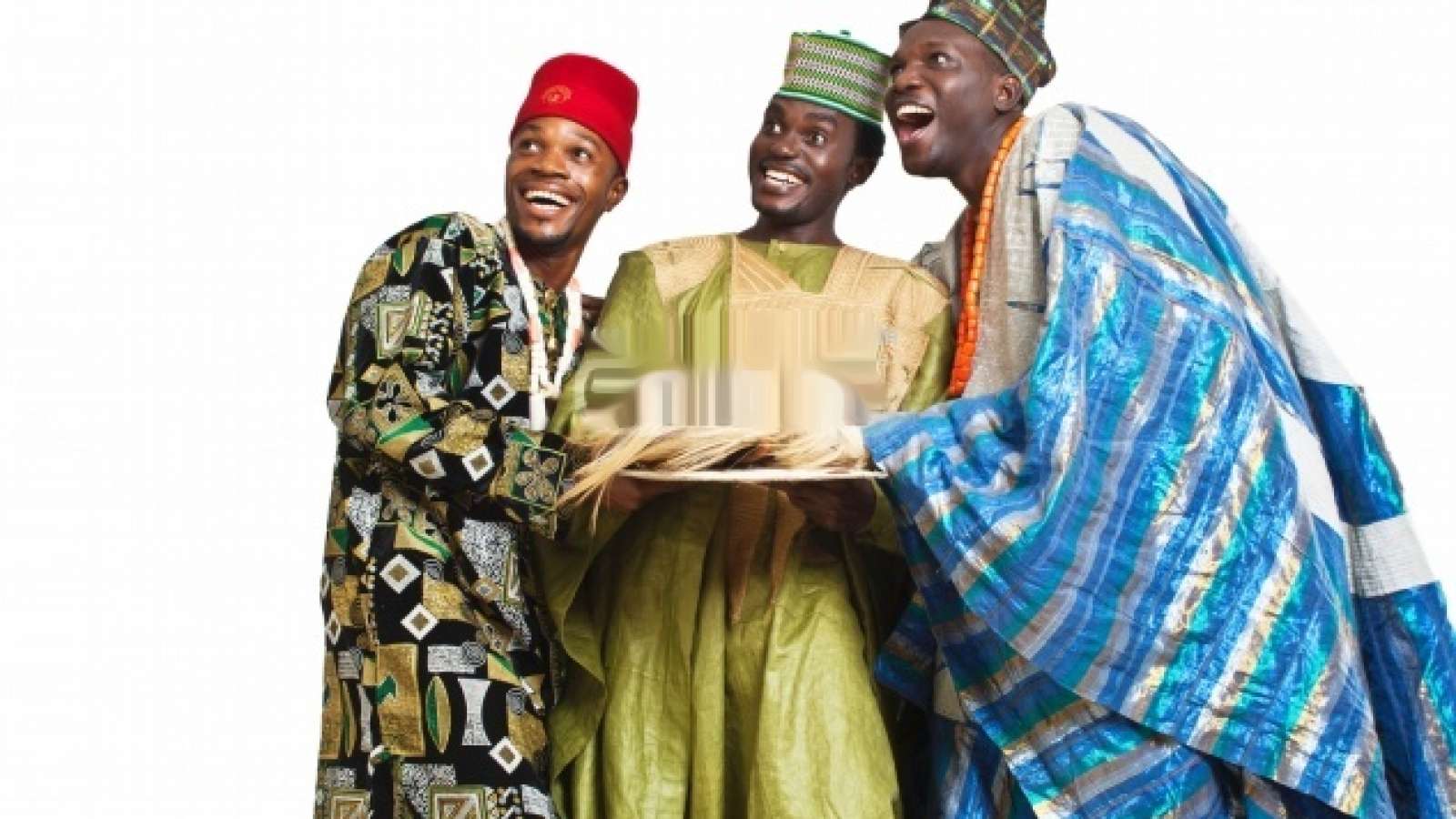
Residential community can be divided into domestic residential community and foreign residential community. The domestic residential community is a place outside one’s ethnic community that shares a lasting political or national link with one’s ethnic community. For instance, Nigeria is a country of various ethnic groups like Igbo, Hausa, Yoruba, Tiv, Ibibio, Benin, Ebira, Ijaw, Ogoni and others who occupy various towns with their land boundaries in Nigeria. If a person who is native to a specific Igbo town lives and works in a Yoruba town, the person is not in his ethnic community, but in a domestic residential community, where he is a national member by virtue of the national union between their communities. With the continued interaction for harmonious growth and several intermarriages, the distinctions between the various communities in a country become less significant.
But if the person from a Yoruba town in Nigeria is living and working or even naturalized as citizen in another country like America, Australia, Russia, Spain or Egypt, he will be said to be living in a foreign residential community. So, a foreign residential community is a community outside one’s ethnic community that does not share a long-term political or national alliance with one’s ethnic community. There, people are related to each other as friends, neighbours, compatriots and other official connections. So, the prevalent way of life within a country as an alliance between several ethnic communities can be called national culture.
- The instrumental or tertiary communities comprises of the professional community, religious community and ideological community. They are not real physical communities like the other two communities, because they are not located in any geographical territory, nor do they have any land boundaries.
- The professional community is the alliance between people in any common profession. It is a grouping that broadly distinguishes and unites people according to their professions, like various unions of doctors, teachers, students, engineers, actors, architects, writers, farmers, fashionistas and all other professions. This professional community is formed from people’s economic interests, and is not distinguishable, defined or limited to any specific race, ethnicity or physical location. The professional community connects people to colleagues and other professionals in a similar field, even in distant locations, in order to enable them to collaborate for the advancement of their professional field. So, they are organized to inspire progress in the field using various incentives and rewards. And the prevalent way of life within different professions can be called professional culture or work culture.
- The religious community is a distinction of people according to their specific faith and religious denominations, and is not automatically distinguishable, defined or based on a race, ethnicity, gender or physical location. While religions expanded through wars in the ancient times, most religious communities grow in the new times through preaching and conversion to a religious belief. So, it connects people by their belief in a common deity or its ways of worship. Religious communities are organized to inspire devotions to specific deities and to influence people’s ways of life according to the religious doctrines. So, the prevalent way of life within different religions can be called religious cultures and traditions.
- The ideological community is a broad distinction of people according to their common ideas, beliefs and values about generalizable or universal social, economic or cultural practices in the world. They include cover groups like feminism, liberalism, Marxism, communism, socialism, capitalism, LGBTQ and other ideas that distinguish and unite people in advocacy for changes in various ethnic communities, residential communities or national policies, cultural beliefs or values. Like professional community, the ideological community rises from various people’s desire for change in a political or economic system or belief, and is not distinguishable, defined or limited to any race or ethnicity. Hence, people can identify with, or advocate to switch to or from any ideology they want at any time. The different ideologies in this level of community spread by converting, training and supporting advocates of a particular ideology in and from different parts of the world. Ideological communities are easily portrayed as rational platforms for people to join a cause for universal progress, since no community or nation can fully provide everything it needs for their people to satisfy their needs. And the prevalent way of life that people follow based on ideologies is broadly to as ‘society’ (Western society, Eastern society, medieval society, modern society, African society, etc.), which loosely refers to an unspecified population, community, tribe or nation, swinging between ideologies. It is at this level of community that ideas are injected, transmitted or even imposed to modify, change or sustain intercommunal and international relations and socio-political reorganizations across personal, communal, racial, tribal national and continental borders both for the rational aim of universal progress and the irrational aim of using logic to pursue the animal and social needs of food, shelter, sex and status.
Though membership to these communities overlap at different times in a person’s life, they do not have the same level of influence in people’s lives. The ethnic and residential community are the only real communities as they physically connect people to a particular environment. On the other hand, the professional community, religious community and ideological community are only instrumental communities which people use as tools to adjust or extend their ways of life within and beyond their real communities; and instrumental communities depend on the ethnic and residential communities for their existence and sustenance. Without permission from the ethnic and residential communities, membership to any of the instrumental communities cannot guarantee one’s passage into an ethnic or residential community. These community stages have different sources and forms of influence in people.
- In their order of affection, the ethnic community is the basic, factual and fixed community because it genetically or ancestrally connects people to others in a society, and despite the migrations and intercommunal evolutions within tribes, clans and ethnicities, the ethnic community remains the primary basis of cultural identity and destiny in the life of an individual.
- The residential community comes second as it connects people to other people within a physical location, where they collaborate as physical neighbours to satisfy their animal, social and rational needs.
- Though it is more recent than the ethnic and residential communities, the professional community comes third since it connects people to methods of using human and natural resources to respond to their basic or animal needs despite their location.
- The religious community comes fourth as it connects people as individuals to supernatural beliefs to satisfy their rational need of interpreting and participating in the course of universal progress by relating with supernatural beings from their different locations.
- Finally, the ideological community comes fifth as it connects people to generalized ideas in order to satisfy their rational need of participating in a cause of universal progress through advocacy for collective changes in social organization, value, practice and lifestylethat is believed to guarantee everyone’s wellbeing and universal progress.
Confusing the level of influence from these different stages of community leads to various degrees of misunderstanding, violence, unproductivity and crises in various societies, especially underdeveloped parts of the world, where various ethnic communities were joined together without consent or proper evolution. These kingdoms and communities were colonially merged so that postcolonial officers can hold the communities for foreigners to extract their resources in exchange for foreign finished goods. This is why some politicians adopt cultural neutrality and urge people to suppress the loyalty to their ethnic communities in order to develop loyalty to unconsented national or ideological cultures. They preach this cultural neutrality as an antidote to tribalism, xenophobia and racism of all sorts.
However, for people to experience progress, especially in the underdeveloped societies, they must be able to use their resources to produce and trade goods and services both locally and globally. This productivity can only begin at the communal level when people recover ownership of their lands and resources to educate and engage their people to produce and trade their goods and services. So, our communal, ethnic or cultural differences must not be denied, distorted or blurred in the name of political correctness and superficial common humanity. Instead, it must be acknowledged, refined and integrated as the deepest source of individuation, variety, emotional strength, social passion, identity and life’s ultimate purpose: the purpose of contributing to humanity’s progress by redeeming our specific communities and cultures from oblivion, unproductivity, irresponsibility or irrelevance. Not just escaping to attach ourselves to other people’s growth with the excuse of being detribalized and under the illusion of global progress whenever our particular community is down, unproductive or irresponsible.”[2]
Acknowledging people’s ethnic community as the primary community and integrating other levels of community (residential, professional, religious and ideological) in building their various communities is not hatred, racism, tribalism, bigotry, supremacy or evil. It only becomes evil when people dominate, exploit and prevent other groups from developing their systems of growth in order to indirectly or directly benefit from their pain, loss, death or misery, or when a people refuse to support other ethnic communities to grow and compete in the infinite league of human development.
[1] Cf. Walter Rodney, How Europe underdeveloped Africa, 2009 edition, (Abuja: Panaf press, 2009), 276.
[2] Cf. Chukwunwike Enekwechi, YouTube, Restartnaija episode 2. 11th February, 2017.